Introduction: why TCM for IBS?
Irritable bowel syndrome (IBS) is a common functional gastrointestinal disorder characterized by abdominal pain, bloating, and altered bowel habits. Pathophysiology involves visceral hypersensitivity, dysmotility, microbiome dysbiosis, and abnormal gut‑brain interactions. Conventional treatments (antispasmodics, fiber, laxatives, antidepressants) often provide insufficient relief. In China, customized TCM formulas have been used for centuries. This review summarizes the evidence for two well‑studied formulas: Tongxie Yaofang and Banzia Xiexin Decoction.
Tongxie Yaofang (TX) – the classic formula for 'liver‑spleen disharmony'
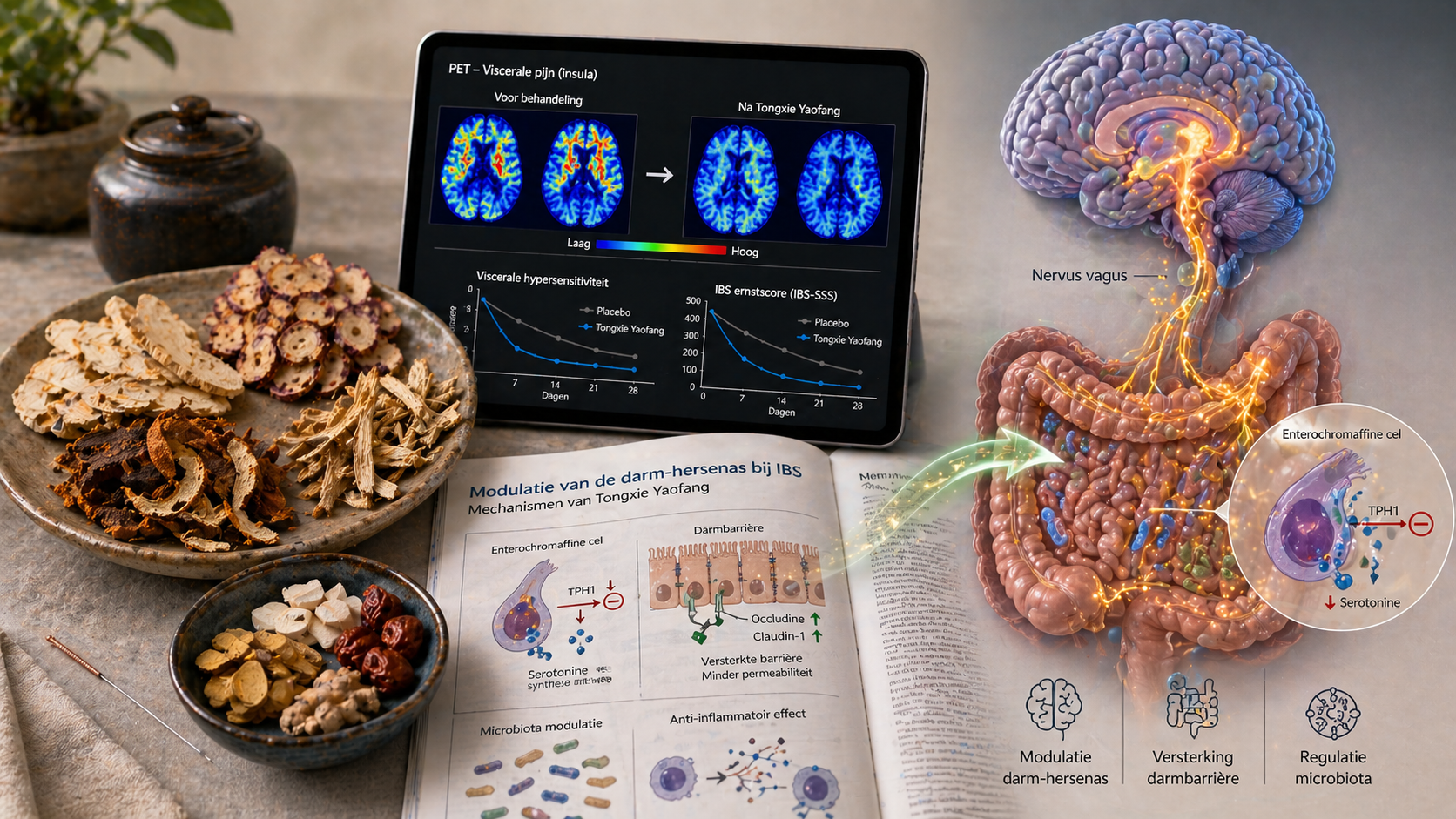
Tongxie Yaofang (''Pain and Diarrhea Stopping Miracle'') consists of Baizhu (Atractylodes), Baishaoyao (Paeonia), Chenpi (Citrus), and Fangfeng (Saposhnikovia). It is the most prescribed TCM prescription for stress‑induced diarrhea‑predominant IBS. A 2025 meta‑analysis of 18 RCTs with 1,845 patients showed that TX plus standard care improved overall response (RR 1.38, 95% CI 1.21–1.57) and reduced abdominal pain scores (SMD −1.12, 95% CI −1.46 to −0.78) compared to standard care alone. Diarrhea frequency decreased and quality of life (IBS‑QOL) improved.
Banzia Xiexin Decoction (BXD) – harmonizing the middle
BXD, originally described in the classic Shanghan Lun, is used in China for IBS with mixed bowel patterns (alternating diarrhea and constipation). A Chinese multicenter RCT (2024, n=360) comparing BXD with pinaverium bromide showed after 8 weeks a superior overall response (78% vs 54%, p<0.001) and a greater reduction in abdominal pain (VAS −2.1 vs −1.2). The effect lasted at least 12 weeks after treatment cessation.
Mechanisms: gut‑brain axis and visceral hypersensitivity
Preclinical and clinical studies have identified key mechanisms:
• **Visceral analgesia**: TX inhibits TRPV1 and P2X3 receptors in enteric neurons, reduces substance P and CGRP release, and normalizes the sensory signal from gut to brain.
• **Microbiome modulation**: BXD increases gut microbiota diversity, enriches butyrate producers (Faecalibacterium, Roseburia), and reduces Proteobacteria. Fecal microbiota transplantation from BXD‑treated mice to IBS mice reduced visceral hypersensitivity.
• **Serotonin homeostasis**: TX downregulates tryptophan hydroxylase 1 (TPH1) in enterochromaffin cells, lowering peripheral serotonin (the key mediator of diarrhea‑predominant IBS).
• **Intestinal barrier**: BXD upregulates tight junction proteins (occludin, claudin‑1) and reduces LPS‑mediated inflammation.
Position in Chinese guidelines
The Chinese Guideline for the Diagnosis and Treatment of IBS (2024) recommends TCM formulas for patients who respond poorly to conventional therapy, with pattern differentiation as a prerequisite: ‘liver‑qi stagnation attacking the spleen’ for TX, and ‘cold‑heat complex with dampness’ for BXD. Both have a grade A recommendation.
Conclusion for clinical practice
For Western clinicians: consider adding Tongxie Yaofang (for stress‑sensitive patients) or Banzia Xiexin Decoction (for mixed or unpredictable patterns) in an IBS patient with pain and diarrhea that does not respond to antispasmodics or fiber. Consult a TCM practitioner for correct pattern diagnosis. Current evidence – including meta‑analyses and double‑blind RCTs – supports an integrated approach.