More depth
Articles have room to develop theory, background and application. This creates more understanding than short definitions or isolated glossaries.
TCM Magazine is a professional platform for therapists, students and specialists who do not want to approach Traditional Chinese Medicine superficially, but want to understand it through theory, clinical context and practical experience.
TCM Magazine is an editorial and educational professional platform. The content is intended for deeper knowledge and does not replace medical diagnosis, treatment or personal medical advice.
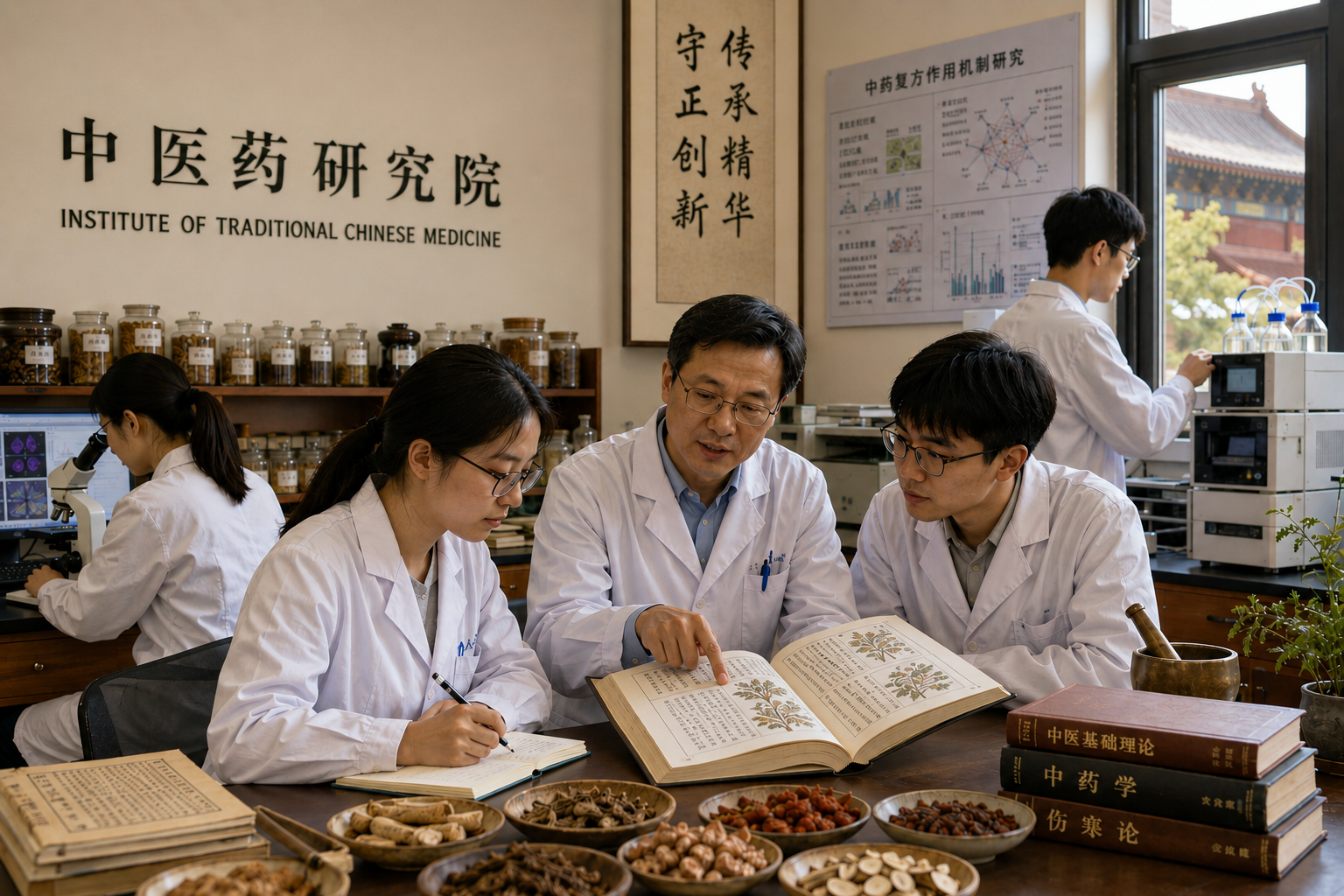
Traditional Chinese Medicine is a complete medical system of thought. Concepts such as qi, blood, yin, yang, dampness, heat, deficiency and stagnation only gain real meaning when carefully connected with diagnosis, the patient picture and clinical experience.
Articles have room to develop theory, background and application. This creates more understanding than short definitions or isolated glossaries.
TCM Magazine writes from the language of practice: patterns, differential diagnosis, treatment direction, point selection, herbal logic and dietary advice.
The content is made for readers already working with TCM or seriously deepening their knowledge of the field.
Acupuncture, herbs, nutrition, meridians, classical texts, modern practice and case studies come together on one editorial platform.
TCM Magazine is aimed at readers seeking depth: therapists, students, teachers, clinics, educators and professionals who want to continue developing TCM content.
For acupuncturists, herbal specialists, tuina therapists, nutrition experts and TCM professionals who want to deepen their clinical view.
For students who want more than diagrams and summaries. The journal helps to understand TCM concepts step by step and in context.
For educators who want to use professional articles as background, inspiration or depth within teaching.
For healthcare professionals and interested readers who want to understand how TCM views health, disease, prevention and treatment.
TCM Magazine organizes knowledge around themes that recur in practice: diagnosis, syndromes, meridians, acupuncture points, herbs, nutrition and case studies.
We start from foundations such as yin-yang, five phases, qi, blood, fluids, zang-fu and meridians.
Symptoms are not viewed separately, but placed within patterns, constitution, etiology and clinical coherence.
Articles translate theory into treatment direction, point selection, herbal logic, dietary advice and lifestyle context.
The journal encourages slow thinking, comparison, rereading and clinical reflection.
TCM Magazine brings together the different parts of the profession. Not as separate categories, but as connected fields of knowledge.
In-depth coverage of zang-fu patterns, eight principles, disease causes, constitution, pulse, tongue and clinical interpretation.
Background on point functions, meridian pathways, combinations, indications and treatment strategy.
Explanation of herbs, flavors, thermal nature, formulas, modifications and use within pattern recognition.
Chinese dietary therapy as a practical daily instrument for balance, recovery, prevention and seasonal living.
A medical professional journal has a different task than an ordinary blog. The content must offer calm, reliability, structure and professional relevance.
Space for extensive treatment of themes that cannot be explained in a few paragraphs.
Practice-oriented articles in which diagnosis, observation and treatment direction come together.
Conversations with specialists, educators and professionals about the profession, education and the future of TCM.
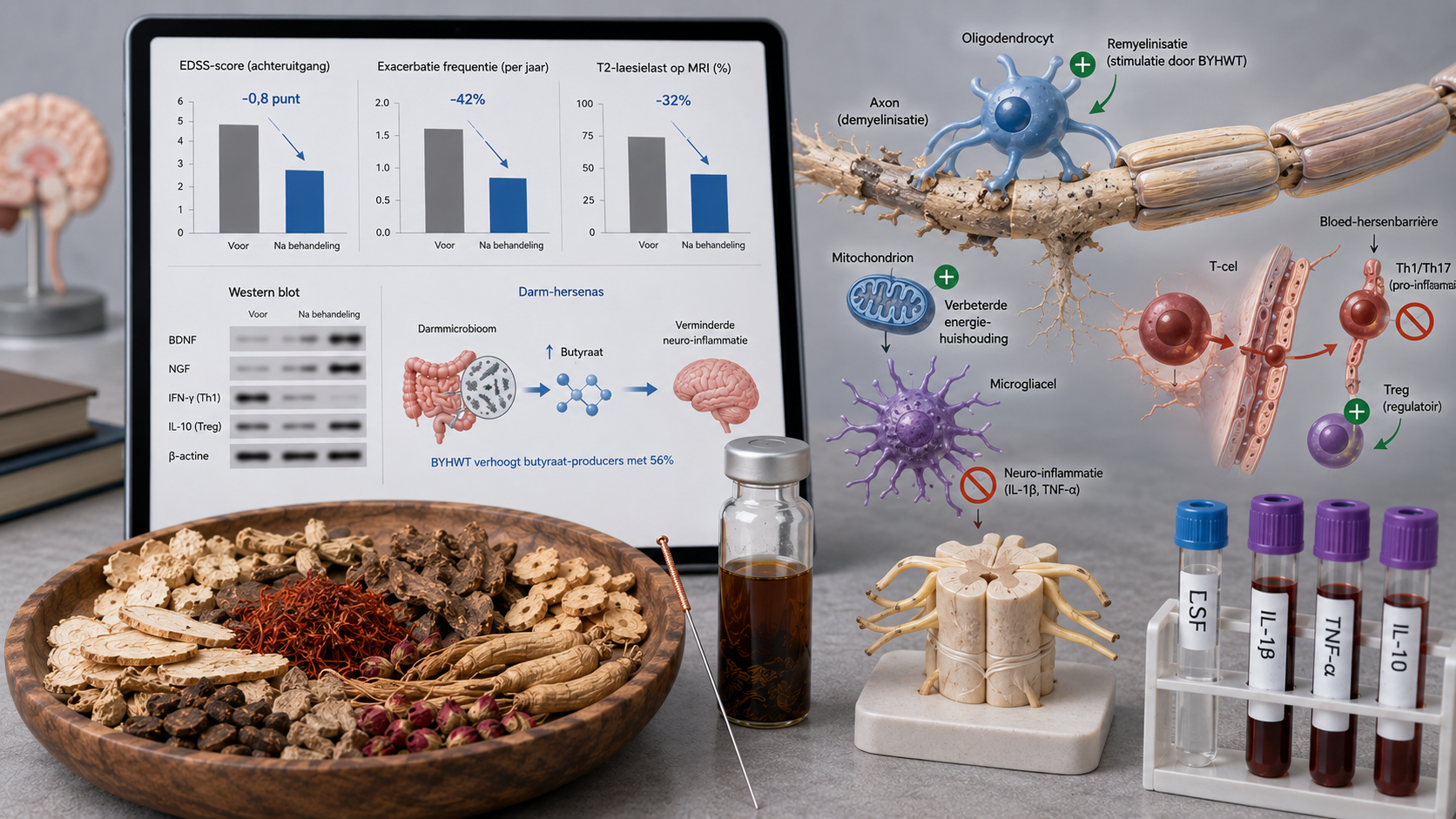
Multiple sclerosis (MS) affects 2.8 million people worldwide. In China, Bu Yang Huan Wu Tang, Yi Qi Hua Yu Tang, Du Huo Ji Sheng Tang, and acupuncture are routinely used. This article discusses mechanisms (neuroprotection, remyelination, immunomodulation, gut-brain axis, mitochondrial function), clinical studies, and practical treatment protocols for TCM practitioners.
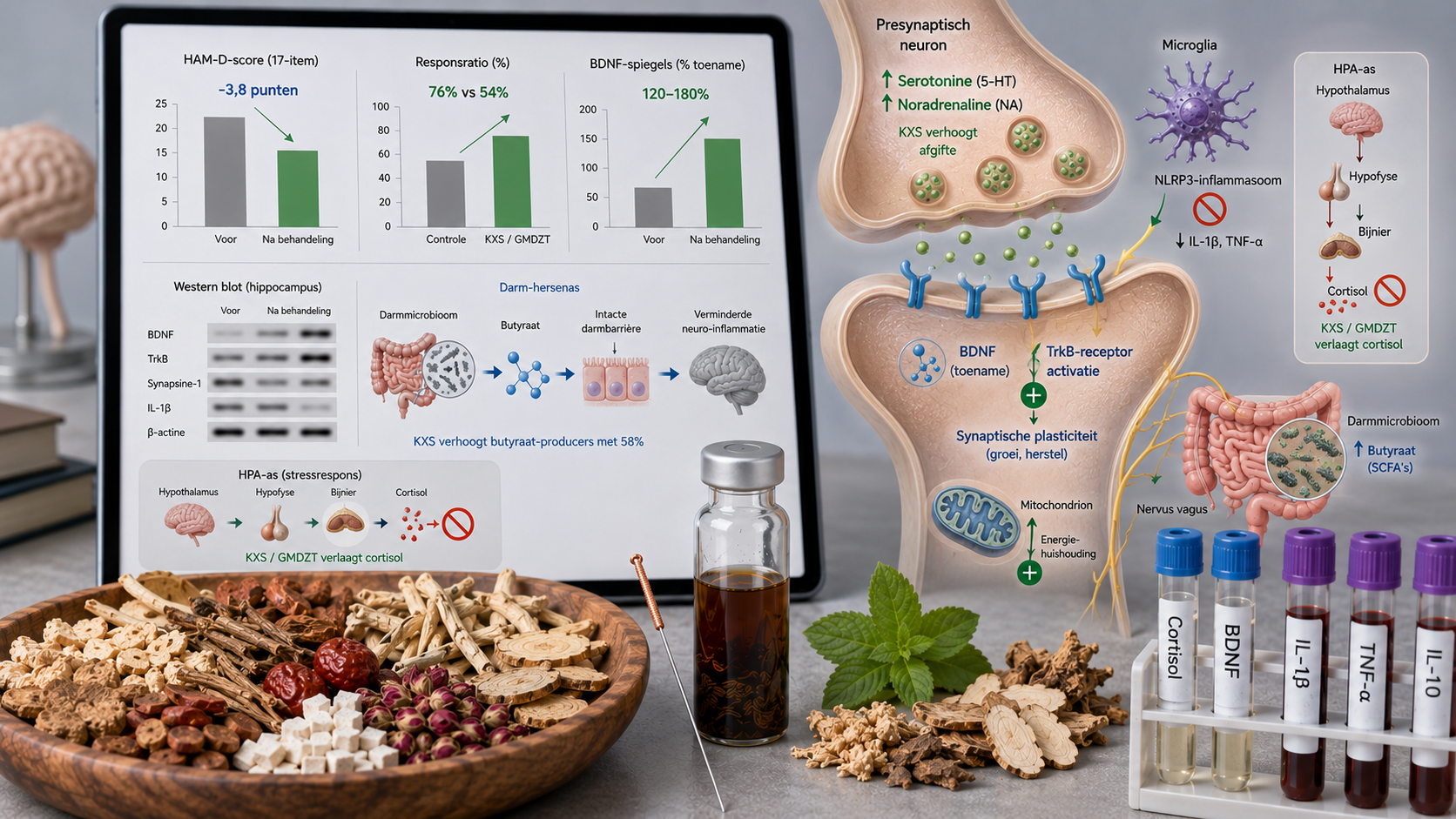
Depression affects 280 million people worldwide. In China, Kai Xin San, Ganmai Dazao Tang, Xiao Yao San, and acupuncture are routinely used. This article discusses mechanisms (BDNF, serotonin, HPA axis, neuroinflammation, gut-brain axis), clinical studies, and practical treatment protocols for TCM practitioners.
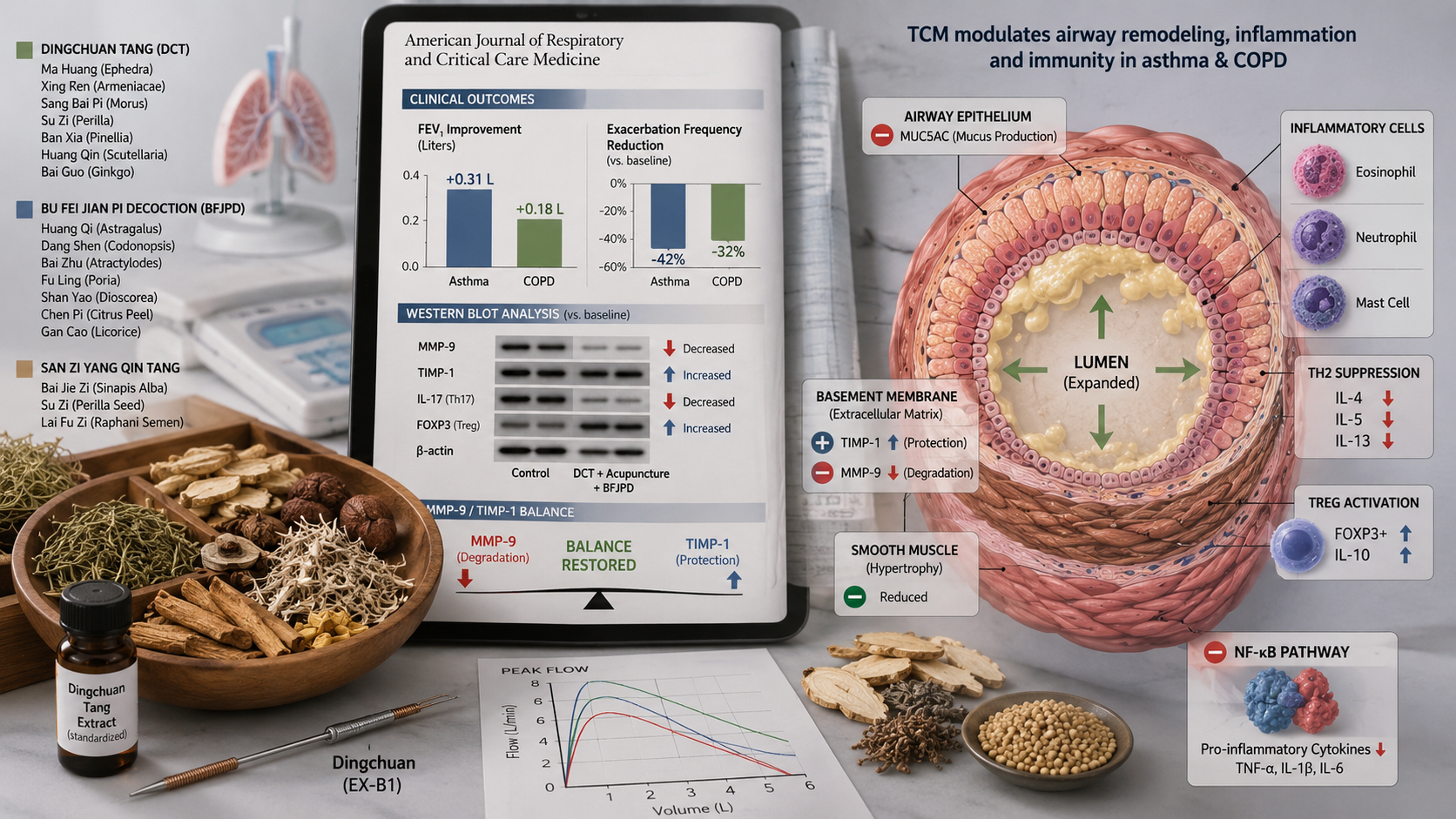
Asthma affects 262 million people worldwide, COPD 384 million. In China, Dingchuan Tang, Bu Fei Jian Pi Decoction, and acupuncture are routinely used. This article discusses mechanisms (MMP-9/TIMP-1, NF-κB, Th1/Th2/Th17/Treg balance), clinical studies, and practical treatment protocols for TCM practitioners.
Read articles, explore syndromes, view acupuncture points and follow the development of a professional TCM journal.
TCM Magazine is intended as a growing professional platform. Suggestions, contributions, collaborations and editorial ideas are welcome.
Choose the entrance that matches your question.
TCM deserves a place where theory, clinic and reflection come together. Not hastily, but carefully and substantively.